Course contents
Call ratio spread and put ratio spread
A ratio spread buys one option and sells two farther out, usually for a credit, and profits in a zone. The catch is the extra sold option, which leaves one side naked and the loss on that side open. It is a premium trade with a tail.
- Build a call ratio spread and a put ratio spread and find the profit zone and the naked tail
- Contrast a ratio spread with the ratio back spreads from Parts 2 and 3
- Explain why the word "back" is the difference between defined and undefined risk
The last strategy chapter returns to a structure you already half-know. In Parts 2 and 3 you met the ratio back spread, which bought two options and sold one, giving a defined-risk bet on a big move. Now meet its front-facing twin, which sells two and buys one. The two look almost the same on paper and share the word ratio, but one small change to the ratio flips the trade from defined risk to open-ended risk. Learning to tell them apart, from a single word in the name, is the point of this chapter and a fitting close to the catalogue.
The call ratio spread
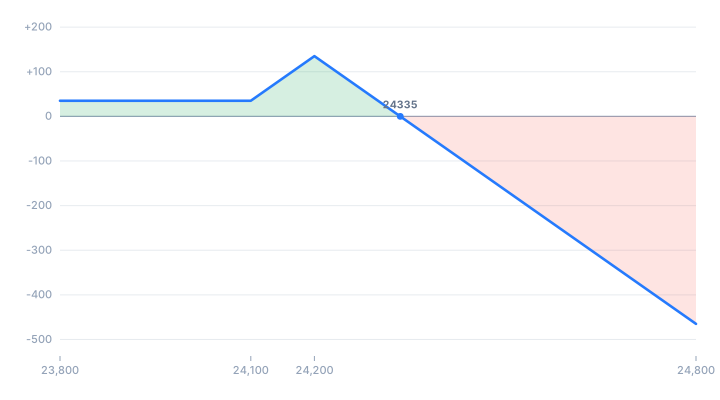
A call ratio spread buys one call and sells two calls at a higher strike. On NIFTY at 24,000, buy one 24,100 call at 105 and sell two 24,200 calls at 70 each. You pay 105 and receive 140, so you collect a small net credit of 35 points. (All figures illustrative.)
Trace the payoff and it looks appealing at first. If NIFTY stays below 24,100, all the calls expire worthless and you keep the 35-point credit. As NIFTY rises toward 24,200, the call you own gains and the position climbs to a peak profit of 135 at 24,200, your sold strike. This is the "slow move up to the sold strike" the trade is built for: mildly bullish, paid to be right.
Then comes the tail. Above 24,200 you are short two calls and long only one, so you are effectively short one naked call, and its loss grows without limit. Your upper breakeven is 24,335, and beyond it the loss just keeps going: at 24,500 you are already down 165, and rising. There is no lower breakeven at all, because a fall simply leaves you the credit. So the whole risk of this pleasant-looking trade sits in one direction, the direction of a strong rally, and it is unlimited.
The put ratio spread
The put ratio spread is the mirror, pointed down. Buy one put at a higher strike and sell two puts lower. Buy the 23,900 put at 110 and sell two 23,800 puts at 80 each, for a net credit of 50 points. It keeps the 50 if NIFTY stays above 23,900, climbs to a peak of 150 at 23,800, its sold strike, and then, below that, the extra naked put opens a large loss as NIFTY falls, with a lower breakeven at 23,650 and heavy losses beneath it. Neutral to moderately bearish, with all the risk in a sharp fall.
The word that changes everything
Put this chapter's ratio spread beside the ratio back spread from Part 2, because the pair is the clearest lesson in the whole course about reading a structure before trading it.
The call ratio back spread bought two and sold one. Owning more than you sold, you were net long options: your risk was defined, you were long volatility, and you wanted a big, fast move. The call ratio spread here sells two and buys one. Selling more than you own, you are net short one option: your risk is undefined, you are short volatility, and you want a slow drift to the sold strike. Same three strikes could be involved, the same word ratio in the name, and yet one is a defined-risk breakout bet and the other is an open-ended premium trade. The difference is only which side of the two-to-one you are on.
Why beginners get caught
The front ratio spread is dangerous precisely because it is so easy to like. You collect a credit, you profit across a wide range, and one whole side is free. All of that is true, and all of it hides the naked tail on the other side. The trader sees the credit and the broad profit zone, sizes up, and is then wrecked by the rare strong move through the sold strikes that pays the open-ended loss. If the ratio structure appeals to you, the back spread is the safer way to get it, because its risk is a number you can write down. Reserve the front ratio for when you fully understand and can manage the naked side, and never mistake its credit for safety.
What to carry forward
The call and put ratio spreads sell two options and buy one, collecting a credit and profiting in a zone up to the sold strike, but leaving one side naked and open-ended. They are the front-facing opposites of the ratio back spreads: the word back marks the safe, buy-two-sell-one version, and its absence marks the risky, sell-two-buy-one one. Read that ratio before you ever trade the structure. That completes all thirty-eight strategies in the builder, across every market view. Part 6 now turns the catalogue into a way of working: how to choose among them, how to manage a live position, what the payoff diagram leaves out in real costs and taxes, and how to move from the page into Niota's strategy builder and the practice sandbox.