Course contents
Not putting all your risk in one bet
Spreading capital across positions only helps if those positions do not all move together. Correlated bets are secretly one big bet, and concentration is how portfolios blow up.
- Explain diversification in plain terms
- Explain correlation and why correlated positions are effectively one position
- Distinguish position-level risk from total portfolio risk
A trader, pleased with the idea of not putting all their eggs in one basket, buys five different stocks: HDFC Bank, ICICI Bank, Axis Bank, Kotak Mahindra Bank, and SBI. Five names, five separate tickets, and it feels diversified. Then interest-rate worries hit the banking sector, and all five fall together on the same day. They did not own five different bets. They owned the same bet five times. Understanding why is the difference between diversification that protects you and diversification that only looks like it does.
Diversification, and its one condition
Diversification means spreading your capital across several positions so that no single bad outcome can sink you. The instinct is sound. If one trade fails, the others carry you. But diversification comes with one condition our bank-buyer forgot, and without it the whole thing is an illusion. The positions have to be genuinely different, which means they must not all move together.
Correlation: the hidden sameness
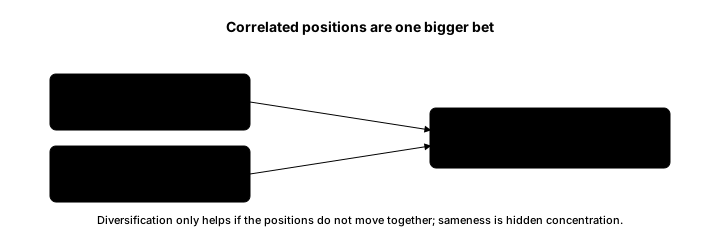
Whether two positions move together has a name: correlation. Two things are highly correlated when they tend to rise and fall at the same time, for the same reasons. Bank stocks are highly correlated with one another, because they respond to the same forces: interest rates, credit growth, the health of the economy. Buying five banks gives you five names but one exposure. When the sector turns, they turn as one.
This is the idea to hold, and it is worth stating bluntly: correlated positions are secretly a single, larger position. Five banks at 2% risk each is not five small bets adding up to a comfortable spread. On a bad day for banks it behaves like one 10% bet, because the same news moves all five the same way at once. Diversification only reduces your risk when the things you hold are driven by different forces, so that a blow to one is not a blow to all. A bank, an IT exporter, an FMCG company, and a pharma maker respond to different drivers, so they are far less likely to fall together than five banks are.
Position risk is not portfolio risk
This is why controlling each trade is not enough on its own. In the earlier chapters you sized every position so that any one of them could only cost you 1 or 2%. But if ten of your open positions are all bullish bets on the same sector, or even on the market as a whole, then a single bad day hits all of them together, and your careful 1% per trade adds up to a 10 or 20% loss in an afternoon. The risk on each position was small. The risk of the portfolio was not, because the positions were the same bet wearing different names.
The sameness can hide in less obvious places too. Being long a basket of large-cap stocks, long a NIFTY future, and short some puts are three different-looking trades that are all, underneath, the same bet: that the market goes up. Add them together and you may be carrying far more directional risk than any single position suggests. The habit that protects you is to look past the individual tickets and ask what you are really betting on, and how much of your capital rides on that one thing being right.
The balance
None of this means owning as many things as possible. Spread too thin, across dozens of positions you cannot follow, and you dilute any edge into the market's average while multiplying costs and mistakes. The point is not maximum scatter. It is to avoid concentration you did not realise you had, by making sure your meaningful bets are driven by different things, and by counting correlated positions as the single larger bet they truly are.
What to carry forward
Diversification protects you only when the things you hold move for different reasons. Hold five versions of the same bet and you have concentration dressed up as spread. Correlated positions behave as one larger position, so a bad day for a sector or for the market hits all of them together, and your tidy per-trade risk becomes an untidy portfolio loss. Always add up what you are truly exposed to across everything you hold.
That habit of totalling your real exposure becomes urgent the moment leverage enters, because leverage lets your total exposure balloon far past the cash in your account. The next chapter is about exactly that: leverage, total exposure, and the risk you carry that the margin figure quietly hides.