Course contents
Volume and conviction
Volume is the conviction behind a move. A move on high volume is more trustworthy than the same move on thin volume, a rising price on falling volume is a warning, and volume confirms breakouts. It confirms price, it is not a standalone signal.
- Explain volume as participation and conviction
- Show volume confirming a move
- Show volume diverging from a move as a warning
Two stocks each rise five percent today. One did it on enormous volume, with a crowd of buyers piling in. The other crept up on a trickle of trades. On the price chart the two moves look identical. They are nothing alike, and the difference is volume, the conviction behind a move.
Volume is participation
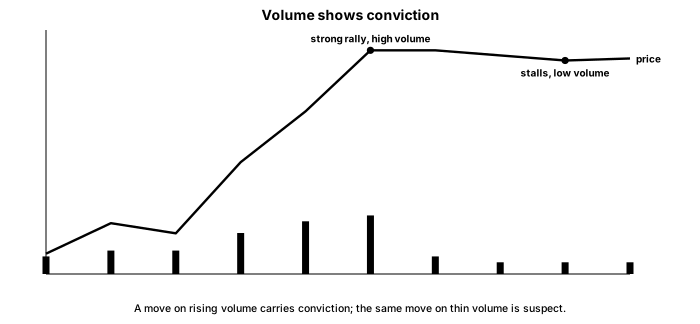
Volume is the number of shares traded in a period, and on a chart it usually appears as bars along the bottom, one under each candle. It measures participation. High volume means many people took part and conviction was strong. Low volume means few did and conviction was weak. Price tells you where the market went; volume tells you how much the market meant it.
Volume confirms a move
A price move carries more weight when volume backs it. A strong rise on heavy volume has real buying behind it and is more likely to continue than the same rise on thin volume, which may be just a handful of trades drifting the price up. This is why volume matters so much at a breakout, when price clears an important level: a breakout on heavy volume is believable, while one on light volume often is not, as a later chapter explores.
When volume disagrees with price
The most useful reading comes when volume and price disagree. If price grinds to new highs while volume steadily shrinks, the move is running out of participants, a divergence that warns the trend may be tiring even as price still climbs. Rising price on falling volume is a quiet red flag. And sudden spikes of very heavy volume often mark exhaustion points, the panic low where selling climaxes or the euphoric high where buying does, places where a move burns itself out.
What to carry forward
Volume measures how many participants stood behind a move, and it turns an ambiguous price change into a readable one. A move on heavy volume has conviction and deserves more trust, a climb on shrinking volume warns of a tiring trend, and volume is what separates a real breakout from a false one. Used as confirmation rather than as a signal in itself, and compared against a stock's normal levels, it is one of the most honest tools on the chart.
That completes the foundations: what technical analysis is, how to read a chart and a candle, how the timeframe reshapes the view, and how volume reveals conviction. The next part turns to the heart of charting, trend and the levels where the market turns.