Course contents
Reversal patterns
Double tops and bottoms and the head and shoulders mark where a trend may be ending, but they are only confirmed when the neckline breaks on volume. They fail often, so demand confirmation and keep a stop.
- Read the double top and bottom and the head and shoulders
- Find the confirmation level (neckline) for each
- Be honest about how often they fail
Beyond a few candles, price traces larger shapes over weeks that mark where a trend may be running out. These are the reversal patterns, and the classics are the double top and bottom and the head and shoulders. The single most important thing about all of them is that they are not confirmed until a specific level breaks.
The patterns
A double top forms after an uptrend: price makes a high, pulls back, rallies to about the same high again, and fails there a second time, tracing an "M". Failing twice at the same resistance suggests buyers are exhausted. It is confirmed only when price breaks below the trough between the two peaks, a level called the neckline.
A double bottom is the mirror after a downtrend: two lows at about the same level, a "W", confirmed when price breaks above the peak between them.
A head and shoulders forms after an uptrend as three peaks: a left shoulder, a higher head, and a right shoulder that fails to reach the head's height. The neckline connects the two troughs on either side of the head, and a break below it confirms the reversal down. Turn it upside down after a downtrend and it is an inverse head and shoulders, a bottoming pattern.
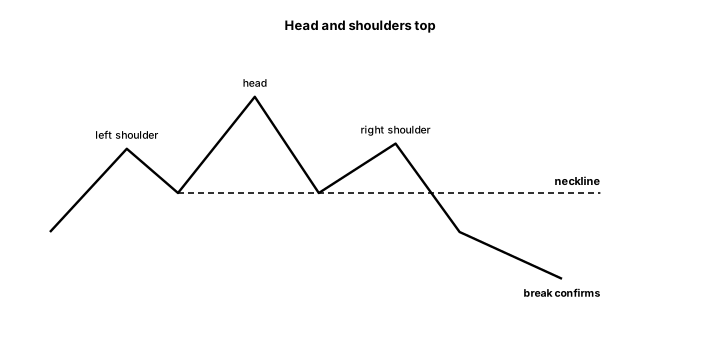
The pattern is a watch; the neckline break is the trigger
Until the neckline breaks, a reversal pattern is only a shape to watch, not a trade. The break, ideally on strong volume as the breakout chapter urged, is what turns the watch into a signal. Many patterns that look perfect never break their neckline and simply dissolve back into the trend. The height of the pattern also gives a rough target: measure from the head or the peaks down to the neckline, and project that distance beyond the break, but treat it as a rough guide, not a promise.
What to carry forward
The classic reversal patterns mark places where a trend may be turning: the double top and bottom, where price fails twice at the same level, and the head and shoulders, with its higher middle peak. None of them is a trade until the neckline breaks, ideally on strong volume, and even that break can fail. Because these patterns fail often and the eye sees them everywhere, the discipline is always the same: wait for confirmation, keep a stop, and hold the target loosely.
Not every pattern signals a reversal. Some mark a pause before the trend continues, and the next chapter covers those.