Course contents
Vega and volatility
Implied volatility is the market's expectation of movement, baked into the premium, so high volatility means fat premiums. Vega measures the effect, and the volatility crush after an event catches buyers.
- Define implied volatility and vega
- Explain the expected move in plain terms
- Explain the volatility crush after an event and why buyers get caught
Two options on the same stock, at the same strike, with the same days left, can carry very different premiums at different times. The very same option can grow dearer or cheaper while the stock does not move at all. The reason is volatility, the most misunderstood force in options, and vega is how its effect is measured.
Implied volatility: the market's expectation of movement
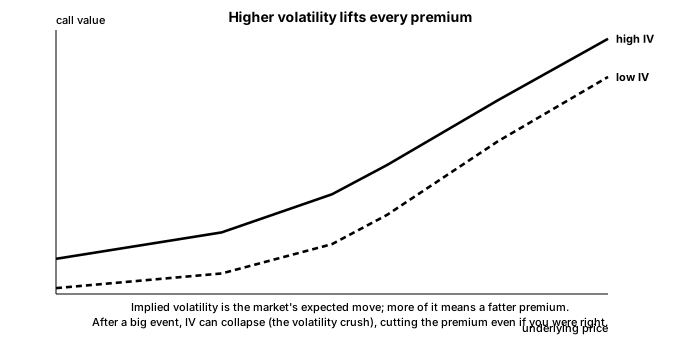
Implied volatility, or IV, is the market's expectation of how much the underlying will move over the life of the option, baked into the premium. When the market expects big moves, implied volatility is high, hope is expensive, and premiums are fat. When the market expects calm, implied volatility is low and premiums are thin. It is called implied because it is worked backward out of the premium the market is actually willing to pay: a rich premium implies a high expectation of movement.
Vega measures how much an option's premium changes when implied volatility changes by one point. A vega of 3 means the premium rises about three rupees if implied volatility rises a point, and falls about three if it drops a point. Both calls and puts gain value when implied volatility rises, because more expected movement raises the chance of a big move in either direction, so vega is positive for a buyer of either.
The expected move, and why events matter
Implied volatility translates into an expected range for the underlying over a period: high implied volatility means a wide expected move, low means a narrow one. This is why premiums swell before known events like a results announcement, the budget, or an election. The market expects a big move, so implied volatility climbs and options turn expensive in the days beforehand.
The trap: the volatility crush
Here is the part that catches beginners. Once the event passes, the uncertainty is resolved, implied volatility drops sharply, and premiums deflate, often hard. This is the volatility crush. Buy an option just before results and you pay a fat, high-volatility premium. The result comes out, and even if the stock moves your way, implied volatility collapses, and unless the stock moved more than the market had already priced in, your option can lose value. Being right on the event is not enough if you overpaid for the volatility.
What to carry forward
Implied volatility is how much movement the market expects, and it is built into every premium: high volatility, fat premiums; low volatility, thin ones. Vega measures how much a premium moves as that expectation changes, and it lifts both calls and puts when volatility rises. The practical sting is the volatility crush, where premiums inflated before an event deflate once it passes, which is why buying options into results or other known events so often disappoints even when the stock cooperates. A fat premium means a big move is already priced in, and you only win by beating it.
One Greek remains, along with a couple of footnotes. The next chapter finishes the set gently, with gamma and the rest.