Course contents
Expiry, exercise, and settlement
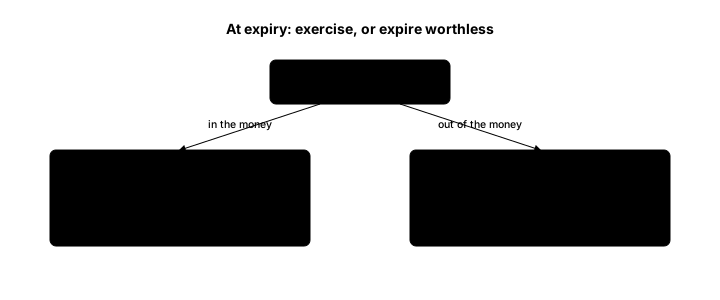
At expiry, in-the-money options settle for intrinsic value and out-of-the-money options expire worthless. The buyer exercises, the seller is assigned, and settlement is cash for index options and delivery for stock options.
- Define expiry, exercise, and assignment
- Explain cash settlement for index options and physical delivery for stock options
- Understand why to close positions before expiry unless you intend the settlement
Every option has a last day. On it, the clock that has been ticking since you bought the option finally runs out, the hope drains to nothing, and only reality is left. That day is expiry, and the words that surround it, exercise, assignment, and settlement, sound technical but are simple once seen plainly.
Expiry day
The expiry is the final day an option exists. Up to and including that day the option is alive, and after it the option is gone. Indian options come in weekly and monthly expiries, each expiring on a set weekday, so you can pick how much time you are buying. (The exact expiry days are set by the exchange and have changed before, so confirm the current schedule.)
What happens on expiry follows directly from moneyness. An option that is in-the-money has intrinsic value, so it settles for that worth. An option that is out-of-the-money has no intrinsic value, so it expires worthless. This is the moment an earlier chapter pointed to: at expiry, time value is gone, and only intrinsic value remains.
Exercise and assignment
Two words describe the two sides of that settlement.
Exercise is the buyer using the right the option grants. In India you rarely have to do anything by hand: an option that is in-the-money at expiry is exercised automatically, and one that is out-of-the-money simply lapses.
Assignment is the other side. When a buyer exercises, a seller is called upon to fulfil the contract, and that seller is said to be assigned. A seller of an in-the-money option will be assigned and must settle. Buyer exercises, seller is assigned: two names for the same event, seen from each side.
Settlement: cash or delivery
How the settlement actually happens depends, as the last part warned, on what the option is written on.
Index options are settled in cash. The intrinsic value at expiry, based on the index's settlement value, is simply paid to the in-the-money side and received from the other. Nothing is delivered.
Stock options are settled by physical delivery. An in-the-money stock option held to expiry results in the actual delivery of the full lot of shares. The holder of an exercised call must take and pay for the shares, and the assigned seller must deliver them. This is the trap to keep in view: an in-the-money stock option left to run turns into an obligation worth lakhs, not a tidy cash difference.
What to carry forward
On expiry day an option's fate is decided by moneyness alone: in-the-money options settle for their intrinsic value, out-of-the-money options expire worthless, and all time value has vanished. The buyer exercises the right, the seller is assigned the obligation, and the settlement is either cash, for index options, or physical delivery of the lot, for stock options. The safe habit is to close a position before expiry unless you genuinely mean to take or give the settlement.
Knowing what an option is worth at expiry across every possible price is best seen as a picture. The next chapter draws it: the payoff diagram.