Course contents
Payoff versus live profit and loss
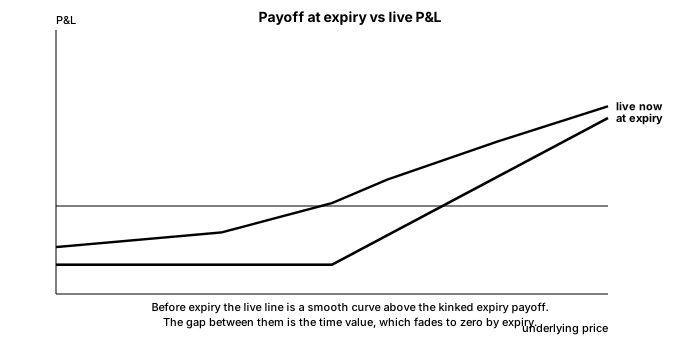
The payoff diagram is the expiry story, intrinsic value only. Before expiry, your live profit and loss is the current premium minus your cost, and time and volatility move it, so you can be right on direction and still lose.
- Distinguish the expiry payoff from live mark-to-market profit and loss
- Explain why being right on direction is not enough
- Understand that time and volatility move the premium independently of the stock
Here is a moment that baffles almost every new option buyer. You buy a call, the stock rises exactly as you predicted, and yet your option is barely up, or is even showing a loss. How can you be right and still not winning? Because the payoff diagram you just learned is the expiry story, and before expiry your profit and loss follows the live premium, which is pushed around by more than the stock price alone.
Two different numbers
Keep two ideas apart.
The payoff at expiry is what the option will be worth on its final day, and it is intrinsic value alone.
The live profit and loss is where you stand right now, and it is the current premium minus what you paid. That current premium still contains time value, and it reflects the market's view of volatility, so it moves every second the market is open. Valuing your position at the current premium, moment to moment, is called marking to market, and your live profit or loss is that mark-to-market premium minus your cost.
Why being right is not enough
This gap is why direction alone does not pay. Two forces move the premium independently of a simple bet on the stock.
The first is time. Even if the stock drifts your way, if it moves too slowly, the time value you paid for is bleeding away underneath the move, and the decay can swallow the gain. The next chapter is devoted to this.
The second is volatility. If you bought when the market expected big moves, so time value was expensive, and then the market calms down, the premium can fall even as the stock edges up. A later chapter gives this its name.
So you can be right on direction and still lose, because time and volatility are moving your premium at the same time the stock is.
What to carry forward
There are two different numbers to hold apart: the payoff at expiry, which is intrinsic value alone, and your live profit and loss before expiry, which is the current premium minus your cost. The live premium still carries time value and reflects volatility, so it shifts constantly and can fall even while the stock moves your way. Being right on direction is not enough, because the move must beat both the clock and any drop in volatility. That is why so many new buyers are right and still lose.
The larger of those two forces deserves a chapter of its own. The next one is about time decay, the option buyer's quiet enemy.