Course contents
Theta
Theta is time decay as a daily number, negative for the buyer and positive for the seller, growing as expiry nears. A buyer needs delta's gains to outrun theta's daily bleed.
- Define theta and read it in rupees a day
- Explain why sellers like theta and buyers fear it
- Connect the delta-versus-theta race to profit and loss
An earlier chapter showed that time value melts away as expiry nears. Theta is simply that melt turned into a number: how much an option loses each day from the passing of time alone.
What theta measures
Theta is the amount of premium an option loses in a day purely from time decay, with the stock price and volatility held still. For a buyer it is written as a negative number, because it is value lost. A theta of minus 2 means the option sheds about two rupees of value a day if nothing else changes. It is the daily rent a buyer pays for holding hope.
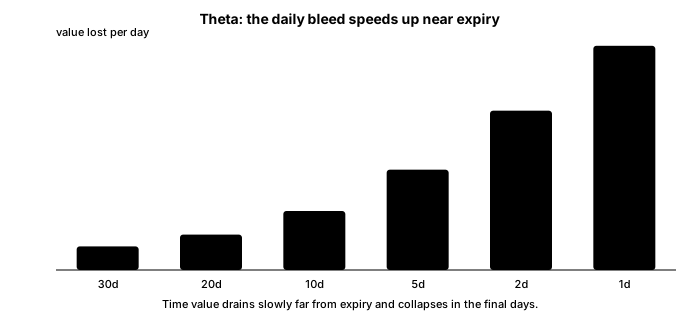
As the chapter on time decay explained, theta is not constant. It grows larger as expiry approaches, especially for at-the-money options, so the daily bleed speeds up toward the end. An option might lose a rupee a day with weeks to go and several rupees a day in its final stretch.
Whose side time is on
Theta has opposite signs for the two sides of the trade. For the buyer it is negative, a steady cost. For the seller it is positive, a steady income, since the value the buyer loses each day is value the seller keeps. Traders describe this as the buyer being short time and the seller being long time. It is the same asymmetry from the buyer-and-seller chapter, now with a name: the seller is paid to wait, and the buyer pays to wait.
The race between delta and theta
Put delta and theta together and you have the buyer's whole daily struggle. Delta is the value a move earns you. Theta is the value time takes from you. To make money, the underlying must move enough each day that the gain from delta outruns the loss from theta. If the stock sits still or drifts too slowly, theta wins and the option quietly loses value, which is exactly the "right but too slow" trap from the payoff chapter.
What to carry forward
Theta puts a daily figure on time decay. It is negative for buyers, who pay it, and positive for sellers, who earn it, and it accelerates as expiry approaches. Set beside delta, it defines the buyer's daily race: the move must earn more through delta than time strips away through theta, or the option loses ground even when the stock does nothing. This is the same time decay you already understood, now precise enough to weigh against a move.
The third force is the one beginners most often pay for without noticing. The next chapter is about volatility and vega.