Course contents
How a contract ends
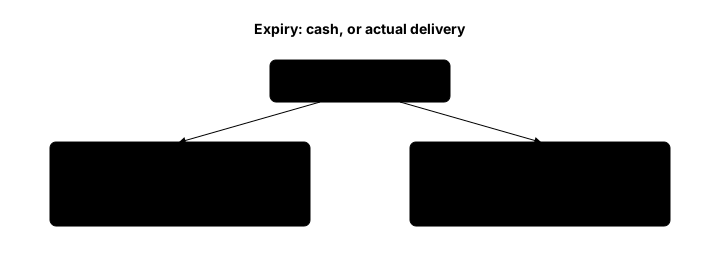
Futures expire monthly. Index futures settle in cash at a closing average, while single-stock futures settle by physical delivery of the actual shares, which can surprise a beginner who holds one to expiry.
- Explain monthly expiry and the current expiry-day framework
- Contrast cash settlement for index futures with physical delivery for single-stock futures
- Warn about the delivery obligation of carrying a stock future into expiry
Every future has a last day. On its expiry date the contract ends and is settled, and what settlement means depends entirely on what the future is written on. For an index future it is painless, a simple cash adjustment. For a single-stock future it can be a genuine shock, because you may be handed a delivery obligation worth many times the margin you posted. This chapter walks through both, and the difference between them is one of the most practical things a beginner can carry.
Monthly expiry
Indian equity futures expire monthly. Each contract runs to its expiry date, at which point it settles for the last time and ceases to exist, while the next months' contracts carry on. The expiry has traditionally fallen on the last Thursday of the month, though the exact day has been revised in recent exchange changes, so treat the specific day as something to check on the exchange calendar rather than assume..
The expiry day itself is a higher-risk session. A large amount of open positions must be closed or settled, margins are raised for the day under the recent framework, and prices can be jumpy. It is not a day for a beginner to be carrying a large or careless position into.
Index futures settle in cash
An index future, on NIFTY or Bank Nifty, settles in cash. There is no basket of stocks to hand over, because you cannot deliver an index; it is only a number. So on expiry the exchange takes a final settlement price, in India the volume-weighted average price of the index over the last half hour of trading, and settles your position in cash against it through the same mark-to-market you already know. If you were long and the index finished above your carried price, you receive the difference; if below, you pay it. Then the contract is done.
The consequence is comfortable: you can hold an index future all the way to expiry with no special worry beyond the ordinary risk of the position. Nothing is delivered, nothing must be arranged, only cash changes hands. This ease is one reason beginners are steered toward index futures first.
Single-stock futures settle by delivery
A single-stock future is a different animal at expiry, and this is the rule to burn into memory. Since 2019, all single-stock futures in India settle by physical delivery. If you hold a stock future open to expiry, you do not simply receive a cash difference. You must give or take delivery of the actual shares. A long stock future held to expiry means you must buy the shares, paying the full contract value in cash and receiving the stock. A short stock future held to expiry means you must deliver the shares, which you must own or arrange.
Sit with what that means for the numbers. You may have taken one lot of a stock future for a margin of a lakh or two, expecting a small cash profit or loss at the end. Instead, at expiry, you are asked for the full contract value, which could be five, seven, or more lakh, to take delivery of shares you never meant to own. Brokers know this catches people out, so in the days before expiry they raise the margins on stock futures sharply, and many will simply square off a client's stock-futures position automatically if the client does not appear able to meet the delivery. Either way, the pleasant fiction of a small cash settlement is gone.
The simple rule
The practical guidance writes itself from the two cases. Index futures are cash-settled, so you may hold them to expiry safely if you wish. Single-stock futures are physically settled, so you should close them before expiry unless you truly intend delivery. Most traders never let a stock future reach expiry at all; they close it, or roll it to the next month, in the days before, which is exactly what the next chapter is about.
If you have taken the options courses, you will recognise this rule, because it is the twin of the one there: close in-the-money stock options before expiry to avoid the delivery and the higher exercise costs. Futures and options share the same expiry-day logic on single stocks, and the same simple defence: do not drift into an expiry you did not plan for.
What to carry forward
Futures expire monthly, on a day worth confirming and worth respecting, since margins are higher and prices jumpier. Index futures end in a clean cash settlement against a closing average, so they can be carried to expiry without special worry. Single-stock futures end in physical delivery of the shares, a full-contract-value obligation that ambushes beginners who expected a cash difference, so they should be closed before expiry unless delivery is truly intended. The way most traders keep a futures view alive without ever facing delivery, and without letting a contract simply expire, is to roll it, which is the subject of the next chapter.