Course contents
The gap between future and spot
The basis is the gap between spot and futures. When the future trades above spot it is called contango, and below it, backwardation. Learn to read the gap and what it can hint at.
- Define basis, contango, and backwardation in plain terms
- Explain the usual cause of each
- Explain that the basis shrinks to nothing by expiry as the two prices meet
The last chapter gave you a number, the 115-point gap between the NIFTY future and the index. That gap is watched closely enough to have earned a name and two directions, and while it usually says less than beginners hope, learning to read it correctly keeps you from misreading it badly. This is a short chapter about one idea: the gap between the future and the spot, what it is called, and what it does and does not mean.
The basis
The basis is simply the gap between the futures price and the spot price. In this course we will take it as the futures price minus the spot price, so when the future trades above spot the basis is positive, and when it trades below, the basis is negative. (Some textbooks define it the other way around, spot minus futures, so always check which sign convention a source is using.)
With NIFTY spot at 24,000 and the near future at 24,115, the basis is plus 115 points. The far-month future, with more carry, might sit at 24,230, a basis of plus 230. The basis is not one number for the whole market; each contract month has its own, growing with time to expiry, exactly as the cost of carry does.
Contango and backwardation
The two directions of the basis have names, and they are worth knowing because you will hear them constantly.
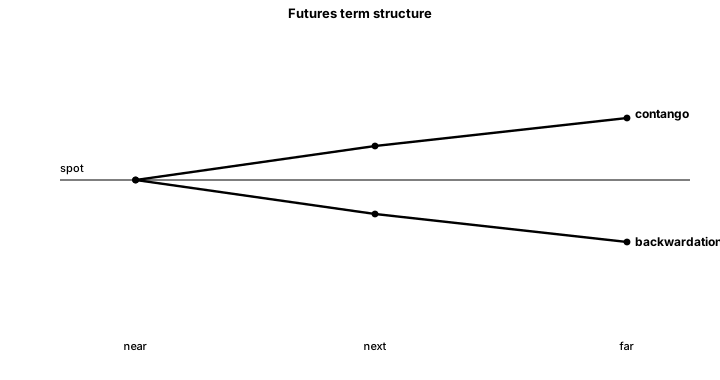
Contango is when futures trade above spot, a positive basis. It is the normal, everyday state for index futures, and you already know why: the cost of carry is usually positive, because funding costs more than the index yields in dividends. In contango the far months sit above the near months, which sit above spot, a gently rising staircase of prices out into the future.
Backwardation is the opposite, when futures trade below spot, a negative basis. It is the less common state, and it appears for specific reasons. In single stocks it shows up around a large dividend, when the dividend yield for the period outweighs the funding cost and flips the carry negative, as you saw last chapter. In commodities it appears when there is a scramble for the physical good right now, so people will pay more for it today than for delivery later. It can also appear when a market is under heavy selling pressure in the futures itself, pushing the future below where carry alone would put it.
What the basis does and does not tell you
Here is where a beginner must be careful. Because the basis is mostly cost of carry, it is mostly arithmetic, not a forecast. A wide contango does not mean the market is bullish, and a slip into backwardation does not by itself mean the market is bearish. Most of the time the basis is just funding minus dividends doing their quiet work.
That said, the basis can carry a faint signal at its edges. An unusually large or small basis, or a swing into backwardation that a dividend does not explain, can reflect crowd behaviour, heavy buying or selling in the futures relative to the cash market. Traders sometimes watch the basis alongside open interest, which the next part covers, for a sense of sentiment. But this is a soft, secondary clue, easily over-read. The safe beginner's stance is to treat the basis as carry first and sentiment a distant second.
Convergence, once more
Whatever the basis is today, it has one certain destiny: it shrinks to nothing by expiry. As the cost of carry fades with time, the future is pulled toward spot, and on expiry day the two prices meet, so the basis becomes zero. This convergence is the quiet engine behind two things you will meet soon: the recurring cost of rolling a position from one month to the next, and the calendar spread that trades the gap between two months directly. Watch the basis narrow as expiry nears, and you are watching convergence happen.
What to carry forward
The basis is the gap between the futures price and the spot, positive in contango, the ordinary state for index futures, and negative in backwardation, seen around heavy dividends or a rush for a physical commodity. It is mostly the cost of carry showing up as a price gap, so it is arithmetic rather than a forecast, and only its extremes hint faintly at sentiment. Like carry, it converges to zero at expiry, which sets up both rollover and calendar spreads later. The next chapter turns to what actually happens on that expiry day, and it carries the one settlement rule that catches more beginners than any other: physical delivery of single-stock futures.