Course contents
Cheap for a reason, and other errors
A low price is not the same as a bargain. A value trap is a stock that looks cheap on the numbers but is cheap because the business is declining. This chapter gathers the recurring mistakes, chasing stories, overpaying for growth, anchoring, and trusting a single ratio.
- Define a value trap and how to distinguish cheap from cheap-for-a-reason
- List the common fundamental-analysis mistakes
- Connect these errors to the biases from the Risk and Psychology course
The most seductive mistake in value investing is also the simplest to describe: buying something because it looks cheap, when it is cheap for a very good reason. A low price feels like a bargain and a margin of safety all at once, which is exactly why it is dangerous. This chapter gathers the recurring errors that catch fundamental investors, starting with the one that has the word "value" in its name.
The value trap
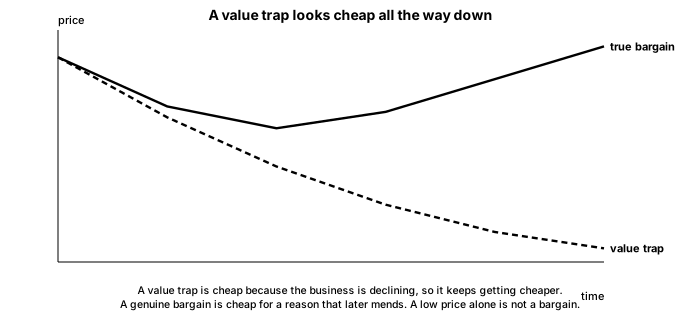
A value trap is a stock that looks cheap on the numbers, a low P/E, a low price-to-book, but is cheap because the business behind it is deteriorating. The low ratio is not a bargain the market has missed; it is the market correctly pricing a business in decline.
Watch how it works. A company earning an EPS of 10 trades at 50, a P/E of just 5, and you buy it as a bargain. But the business is shrinking, and next year its EPS falls to 8. The market keeps it at a P/E of 5, so the price drops to 40. The year after, EPS is 6.4 and the price is 32; then 5.1 and 26. All the way down it looked cheap, a P/E of 5 the whole time, while you lost money at every step. The low P/E was never a bargain. It was a warning that the market expected the earnings to keep falling, and it was right.
The cure is the qualitative work of Part 4. Ask why the stock is cheap. If it is a sound business with a real moat, temporarily out of favour for a reason that will pass, the low price may be a genuine opportunity. If it is a business in structural decline, losing to competitors or to a changing world, the cheapness is deserved and will deepen. Cheap and good is an opportunity; cheap and deteriorating is a trap, and only judgement about the business, not the ratio, tells them apart.
The recurring mistakes
The value trap is one of a family of errors that recur so often they are worth naming together.
Overpaying for growth is the value trap's mirror image, covered in the growth chapter: paying almost any price for an exciting growth story, on the assumption that rapid growth will continue for years. When the growth slows, the earnings and the rich multiple fall together, and the loss is severe. A great business is not a great investment at any price.
Anchoring is fixating on a number that should not matter, most often your own purchase price or the stock's past high. You refuse to sell a broken investment below what you paid, or you decide a stock that once traded at 1,000 must be cheap at 600, regardless of what the business is now worth. The market does not know or care what you paid or what it once cost.
Single-ratio thinking is buying on one number in isolation, a low P/E above all, without the full picture. Both the value trap and the cyclical trap from the industry chapter are single-ratio errors: a low P/E meant opposite things for a declining business and a peak-cycle one, and only the wider analysis revealed which.
Confusing a good company with a good stock ties them together. A wonderful business bought at too high a price is a poor investment, and a merely decent one bought cheaply enough can be a fine one. The quality of the business and the attractiveness of the stock are two separate judgements, and you must make both.
These are the old biases, in new clothes
If these errors feel familiar, they should, because they are the biases from the Risk and Psychology course wearing an investor's suit. Buying the value trap and holding it down is loss aversion and the disposition effect, refusing to accept you were wrong. Clinging to your purchase price is anchoring, named there and here. Falling for the growth story you want to believe, and reading only the news that supports it, is confirmation bias. The mistakes of the fundamental investor are not new; they are the same human wiring that undoes the trader, which is why that course and this one are two halves of one education. The defence is the same too: a written process followed honestly, and the humility to let the evidence, not the story, decide.
What to carry forward
A cheap price is only a bargain if the business is sound; when it is declining, the low ratio is a value trap that stays cheap while both earnings and price fall, and only judgement about the business tells a trap from a real opportunity. The same family of errors, overpaying for growth, anchoring to your buy price, trusting one ratio, and confusing a good company with a good stock, are the Risk and Psychology biases in new clothes, and the cure is an honest, written process.
You now have every piece: how to read a business, judge it, value it, and avoid the traps. The last chapter assembles them into a repeatable investment case and checklist, turns the analysis into a portfolio, and points you to the sandbox to practise, closing the investing path.