Course contents
Risk and return
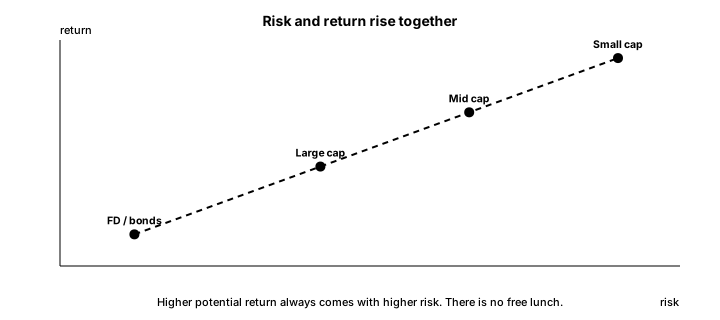
Higher potential return and higher risk always travel together, because the market prices risk. A high return offered with little or no risk is the clearest warning sign in investing.
- Define risk and return
- Explain the risk-return trade-off with an Indian example
- Recognise that guaranteed high returns are a warning sign
The first question a beginner asks about any investment is how much they will make. The better question, the one a professional asks first, is what must be risked to make it. Every return you will ever be offered comes with a price tag written in risk, and learning to read that tag is most of what investing is.
Two words, always paired
A return is what you earn on an investment, both any income it pays and any rise in its value, usually stated as a percentage a year. That is the number everyone likes to talk about.
Risk is the quieter half. It is the chance that things turn out worse than you hoped, up to and including losing some or all of your money, together with how much the investment lurches around on the way there. Risk is not only the possibility of loss. It is uncertainty itself.
The one rule you cannot escape
Here is the rule that sits under every investment decision: higher potential return and higher risk travel together, always. There is no investment that reliably pays a lot while risking little. If one ever appeared, the reason it could not last is worth understanding. Everyone would rush to buy it, and that flood of buyers would push its price up until the easy return was gone. The crowd competes away any free lunch before you reach it. This is why the market, in effect, prices risk: to be paid more, you must accept more uncertainty.
You have already seen this ladder in pieces. A savings account is nearly safe and pays little. A large, established company's shares carry moderate risk and, over long periods, a moderate return. A small company's shares dangle a high potential return and, in the same breath, a real chance of deep loss. Each rung offers more only by asking you to bear more. Which rung suits you depends on your time horizon and your temperament, not on which number looks nicest.
Why a safe, high return is a warning sign
Because risk and return are welded together, any offer of a high return with little or no risk is one of two things: a misunderstanding, or a fraud. The words are familiar. Guaranteed three percent a month. Double your money in six months, fully safe. These are not descriptions of investments. They are the vocabulary of scams. A genuine high return always arrives with genuine, visible risk. If you cannot see the risk, it has not vanished. It is either hidden from you, or it is a lie.
What to carry forward
Return and risk are two sides of one coin. A return is what you hope to earn, risk is the uncertainty and possible loss you take on to earn it, and no honest investment offers much of the first without the second, because the market prices risk and the crowd competes away any free lunch. Choose your place on the risk ladder deliberately, matched to how long you can leave the money alone, and treat any promise of high, safe, guaranteed returns as the loudest alarm in the market.
That alarm leads straight to the errors that cost beginners the most. The next chapter names them, one by one, with a simple guardrail for each.