Course contents
Clearing and settlement
After a trade is matched, clearing works out and guarantees who owes what, and settlement delivers the shares and money. In India this completes on a T+1 timeline.
- Define clearing and settlement
- Explain the Indian T+1 settlement cycle
- Explain why settlement timing matters for your money
You buy ten shares at a quarter past ten in the morning, and the confirmation appears at once. It looks finished. In truth, a quiet and careful process has only just begun, moving the shares into your account and the money to the seller, and it completes the next day. That process is clearing and settlement, and though you rarely see it, it is what makes trading with total strangers safe.
Clearing: working out who owes what
The instant your order matches a seller's, the trade is agreed, but nothing has actually moved yet. Clearing is the step that works out exactly who owes what to whom, netting together all of a day's trades so that each participant has a single amount of money to pay or receive and a single number of shares to deliver or receive. Sitting in the middle of all this is a clearing corporation, which becomes the guarantor to both sides. It is the reason, from the exchange chapter, that you never have to trust or even know the person on the other side of your trade.
Settlement: the actual delivery
Settlement is the moment the promises are kept: the shares are delivered into the buyer's demat account and the money is delivered to the seller. When settlement is done, and only then, the trade is truly complete and the shares are formally yours.
The Indian timeline: T plus one
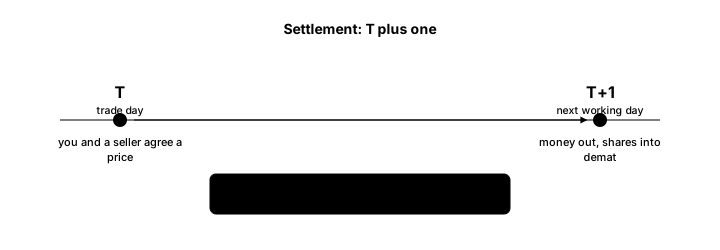
In India, settlement runs on a T plus one basis, written T+1. Here T stands for the trade day, and T+1 for the next business day. Buy shares on Monday and they settle into your demat by Tuesday, while the seller receives the money by Tuesday too. India is among the faster major markets in the world on this count, having moved from the older two-day cycle down to one day, and the market has been steadily working toward even quicker settlement. For your purposes the rule is simple: a trade finishes the next business day.
Why it matters for your money
This timeline has real, practical consequences.
When you sell, the money reaches your account by T+1, not the same instant. If you are counting on that cash the same evening, you are a day early.
When you buy, the shares are formally delivered to your demat by T+1, even though your order was confirmed at once.
And the clearing corporation's guarantee means that even if the party on the other side fails to deliver, the system steps in and makes you whole. That safety net is precisely what lets a market of strangers function.
What to carry forward
Behind every instant confirmation sit two steps you rarely see. Clearing nets and guarantees who owes what, with a clearing corporation standing in the middle so no one has to trust anyone. Settlement then delivers the shares into the demat and the money to the seller, finishing the trade on India's T+1, next-business-day timeline. The takeaway is practical: sale proceeds and share delivery take a day, and the guarantee that makes strangers safe to trade with covers default, not a falling price.
That completes the working machinery of the market. You now understand what a share is, where it trades, who watches over it, how you open accounts, how orders work and settle, and who is on the other side. The next part turns to a skill you will use every single day: reading and understanding the price itself, starting with how to read a stock quote.